


Water Security First: Why International Experts are Sounding the Alarm on Uranium Mining in the Stampriet

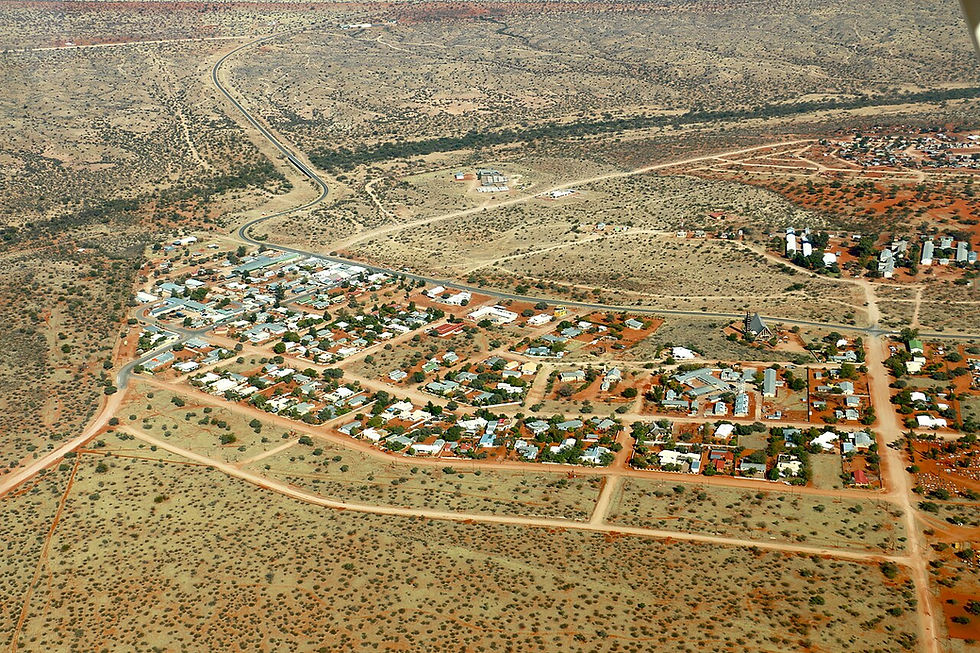
The proposed In-Situ Leach (ISL) uranium mining within Namibia’s Stampriet Transboundary Aquifer System (STAS) has reached a tipping point of international concern. While proponents often frame this as a standard development project, regional water authorities and global governance bodies are issuing a much more sobering message: the STAS is a highly sensitive, shared, and irreplaceable drinking water resource that cannot be treated as a laboratory for high-risk mining.
For SAUMA, the message is clear: opposition to ISL in this region isn’t just an "activist" stance, it is a position rooted in international law, regional security, and established science.
A Regional Warning: The ORASECOM Stance
The Orange-Senqu River Commission (ORASECOM), the intergovernmental body mandated to protect our shared water basins, has adopted a firm precautionary stance. From a basin-wide perspective, the STAS is a strategic, sole-source groundwater system that supports rural communities, agriculture, and livestock across Namibia, Botswana, and South Africa.

ORASECOM’s technical assessments warn that ISL mining poses risks that simply cannot be contained within Namibia's borders:
Direct Contamination: The process introduces radioactive and chemically mobilised contaminants directly into the groundwater.
Irreversible Damage: The aquifer suffers from slow recharge and weak natural attenuation, meaning once it is contaminated, it stays contaminated on a human timescale.
Shared Risk: Any impact in Namibia creates an unacceptable transboundary risk for our neighbors.
UNESCO: Precaution Over Development
UNESCO’s guidance on transboundary aquifers reinforces this regional concern. Under international law principles, states have a fundamental duty to prevent "significant harm" to the water resources they share with other countries.
UNESCO and the UN International Law Commission are explicit:
Prior Consultation: High-risk activities like ISL require prior notification and agreement among all affected states.
Protection First: Sole-source and vulnerable aquifers should be protected from hazardous industrial activities.
The Bottom Line: Where uncertainty exists and the consequences are potentially irreversible, the protection of the water must override industrial development.
Correcting the Record on IAEA Guidance
You will often hear mining companies cite the International Atomic Energy Agency (IAEA) to justify ISL projects. However, the IAEA does not give blanket approval for this mining method.
In fact, the IAEA’s strict technical preconditions for ISL appear to disqualify the Stampriet entirely. According to the IAEA, ISL is only appropriate when:
The uranium is hosted in a geologically confined aquifer isolated by impermeable layers.
The groundwater is not used (and not expected to be used) for drinking or agriculture.
Full containment and restoration can be reliably demonstrated.

The Core Message
The STAS is a drinking water source for three nations. By the IAEA’s own standards, some aquifers are fundamentally unsuitable for ISL regardless of mitigation measures.
The opposition to ISL in the Stampriet is not anti-development; it is pro-science and law-aligned. We are talking about an arid region with no realistic water alternatives.
The international community, from ORASECOM to UNESCO, is converging on a single point: the Stampriet Transboundary Aquifer System is too precious to be subjected to high-risk mining experiments.


