top of page


Latest News
Stay informed, stay involved. Check out the latest updates on our campaigns, community activities, government decisions, and relevant news regarding our water sources and potential threats to them.
Visit often for fresh insights, upcoming events, and ways you can make a difference.


Toxic Threat: Will Uranium Mining Destroy Namibia’s Largest Drinking Water Source?
The Stampriet Aquifer, a lifeline for 80,000 people across Namibia, Botswana, and South Africa, faces a crisis. Uranium mining using "in situ leaching" threatens to inject sulfuric acid into primary drinking water. Experts warn that natural faults and leaky boreholes make containment impossible, risking contamination 30,000 times above WHO limits. With no surface water alternatives, this would collapse a N$1 billion agricultural sector.
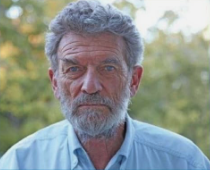
Dr. Roy Miller
Apr 212 min read


The Stampriet Aquifer and the Cost of Ignoring the Precautionary Principle
Is it development or displacement? Reinhold Mangundu explores the hidden costs of uranium mining near the Stampriet Aquifer. While profits and jobs are often promised, the long-term risks to Namibia’s groundwater—the foundation of survival for 50,000 people—cannot be ignored. This article examines the blurred lines between corporate influence and environmental governance, asking a vital question: Will we protect our ecological lifelines or sacrifice them for short-term gain?

SAUMA
Mar 272 min read


The Schlettwein Legacy: Is Namibia’s "Wings Project" a Flight to Disaster?
Is Namibia’s "Wings Project" a flight to disaster? Our latest piece explores the "Schlettwein Legacy"—a stand against the industrial exploitation of the Stampriet Aquifer. With 70+ illegal boreholes already flagged, the risk to our water sovereignty, "Brand Namibia" exports like Kalahari Lamb, and the Gondwana tourism experience is too high. We can't trade a permanent agricultural engine for a 25-year mining mirage. Our water is our future. Let’s keep it pure.
SAUMA
Mar 163 min read


🛑 OUR WATER IS OUR LIFEBLOOD: Don’t Let Them Poison the Veins of the Kalahari
Namibia faces a "Point of No Return". Mining companies claim In-Situ Recovery (ISR) uranium mining is safe, but global data shows that once an aquifer is contaminated, it cannot be "un-poisoned". This isn't just local; the Stampriet is a transboundary system sustaining Botswana and South Africa. We are gambling with water security for a short-term payday. We can survive without uranium, but we cannot survive without clean water.
SAUMA
Mar 34 min read


SAUMA Engages with IAEA on Uranium In Situ Leaching Project in Omaheke
SAUMA engages with the IAEA on the proposed uranium in situ leaching mining project in Omaheke. Learn about groundwater risks, environmental concerns, and the call for an independent hydrogeological study.
SAUMA
Feb 263 min read


The Chemistry of Risk: Unpacking the "Lemon Juice"Comparison in ISL Mining
Is the acid used in uranium mining really as safe as "lemon juice"? In this deep dive, we unpack the dangerous chemistry of In-Situ Leaching (ISL) in the Stampriet Aquifer. We move past the metaphors to reveal the 30,000x factor: how mining concentrations exceed WHO safety guidelines by staggering margins. Discover why "liberating" heavy metals into our underground water creates a risk that can’t be undone.
SAUMA
Jan 242 min read


Giant Freshwater Aquifer in Southern Africa is Under Threat from Mining
Namibian government has awarded uranium prospecting licenses to several mining companies across the aquifer system.
SAUMA
Jan 16, 20255 min read


Hoe werk in situ-loging (ISL)-mynbou?
ISL-ontginning van uraan behels die boor van duisende boorgate, wat tussen 20 m en 30 m van mekaar geleë is
SAUMA
Dec 23, 20241 min read
Wie funktioniert der In-situ-Laugungsabbau (ISL)?
Bohrlöcher im Abstand von 20 bis 30 Metern in den Erzkörper gebohrt, der an der Sohle des unterirdischen Grundwasserleiters zu finden ist.
SAUMA
Dec 23, 20241 min read
How does in situ leach mining work?
In situ leach (ISL) mining of uranium involves the drilling thousands of boreholes spaced between 20 and 30 m apart
SAUMA
Dec 23, 20241 min read
bottom of page