Global ‘Water Bankruptcy’ and the Fight for the Stampriet Aquifer

Updated: Aug 12

The year 2026 has offered a stark global reminder of both the structural importance and the extreme precariousness of our freshwater supplies. Across the globe, we are witnessing the exact same crisis manifest from opposite ends. In the Gulf Cooperation Council nations, vital desalination plants have been targeted by geopolitical conflicts, threatening the drinking water of 62 million people. Meanwhile, in Central America, a prolonged drought has lowered water levels in the Panama Canal, choking maritime trade and forcing a strict rationing of access.
Water is, in the strictest sense, a critical security issue. Yet, the global community has yet to govern it as one.
The consequences of this inadequate resource management are far-reaching. Water is the most vital agricultural, environmental, and industrial input on Earth. Around 90% of global freshwater withdrawals directly support economic activity, while the remaining 10% sustain our households. When water infrastructure is mismanaged or compromised, the economic fallout is catastrophic. Droughts cost the global economy an estimated US$307 billion annually, and regional water pollution continues to erode gross domestic product across entire continents.
Now, United Nations researchers are issuing a sobering warning: many regions are rapidly approaching a state of water bankruptcy. This is the critical tipping point where water systems can no longer realistically return to their historical baselines due to over-depletion, chemical pollution, and permanent damage to water-related natural capital.
For Namibia and our neighbours, this global warning is not an abstract theory. It is the exact structural reality facing the Stampriet Transboundary Aquifer System right now.
Water Scarcity and the Irreversible Threat of Chemical Pollution
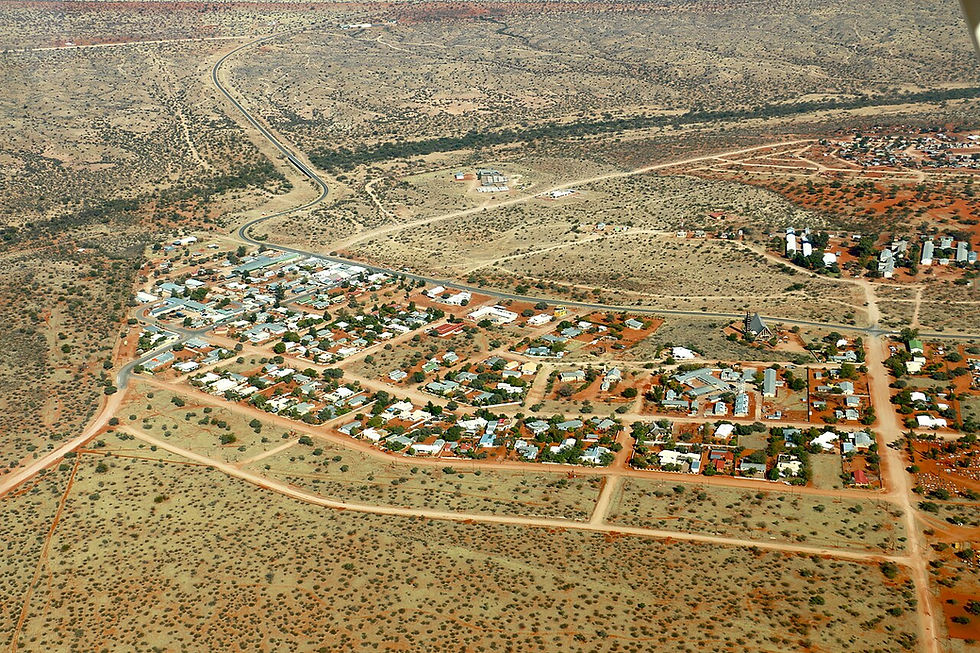
In Namibia's semi-arid landscape, groundwater is not an industrial luxury; it is a scarce and irreplaceable lifeline. The Stampriet Transboundary Aquifer System sustains over 80,000 human lives, 1,300 commercial and communal farms, and a thriving regional eco-tourism sector across Namibia, Botswana, and South Africa. This pristine agricultural engine generates over N$1 billion annually and provides more than 13,000 permanent jobs.
The true danger facing this delicate ecosystem is not a debate over water usage, but the threat of severe, permanent chemical contamination. In-situ leach (ISL) uranium mining relies on injecting aggressive acid solutions directly into water-bearing rock layers. This process does not merely dissolve uranium; it actively liberates a toxic cocktail of dormant radioactive elements and heavy metals that would otherwise remain safely locked in the stone. The resulting contamination introduces dangerous levels of radionuclides, radioactive decay products (such as radium and radon), and toxic heavy metals including arsenic, lead, cadmium, and selenium directly into the drinking water supply.
Once these radioactive components and heavy metals enter a shared, flowing aquifer, the chemical balance is permanently shattered. Trading a pure, multi-generational water supply for a short-term mining project introduces a toxic liability that no regional economy can afford.
The Chemistry of Risk vs the Myth of Restoration
The good news highlighted by global economists is that water resilience is not a technological mystery. The protective solutions are well-known: better infrastructure, independent scientific planning, and transparent governance. Furthermore, they are incredibly cost-effective.
Every single dollar invested in safeguarding clean water and sanitation infrastructure generates between US$4 and US$12 in economic returns through avoided public health costs and sustained long-term agricultural productivity.
Despite these proven returns, our national water security is being treated as a laboratory for high-risk industrial experiments. Proponents of In-Situ Leach (ISL) uranium mining continue to assure the public that their underground chemical injections can be safely contained and that the aquifer can be perfectly restored to its baseline quality once extraction concludes.
Global data from the peer-reviewed "black box" of international mining tells a completely different story:
The Restoration Mirage: Extensive studies by the United States Geological Survey confirm that no ISL uranium mine has ever successfully returned an exploited aquifer to its original baseline drinking water quality.
The Contamination Reality: The active mining process involves injecting aggressive chemical solutions directly into water-bearing formations, creating a toxic leachate that multiplies uranium and heavy metal concentrations up to 30,000 times above safe World Health Organization guidelines.
The Underground Suction: In the Stampriet Basin, local agricultural irrigation pumps draw more than 700 cubic metres of water every single hour. This massive, continuous hydrological pressure alters natural groundwater flow patterns, creating an artificial suction that can pull toxic mine solutions tens of kilometres away into clean drinking wells.
Choosing Sovereignty Over Sacrifice
Abundant and predictable water supplies have supported Southern African livelihoods, agricultural development, and regional food security for generations. But the days when groundwater could be taken for granted are officially over. Water is our most vital strategic asset, and our regulatory institutions must treat it with the exact same seriousness as they do national finance, trade, and state sovereignty.
As the Environmental Commissioner approaches a definitive decision regarding test mining permits in the Omaheke region, Namibia faces its own point of no return. We cannot un-spill acid into our primary water supply, and we cannot insure a contaminated agricultural basin.
The countries, communities, and economies that excel over the coming decades will be those that actively protect their water capital from irreversible industrial damage. SAUMA remains steadfast in its demand for a comprehensive, independent hydrogeological flow study before a single chemical is introduced to our shared lifeblood. Namibia can survive without a short-term uranium mine, but we cannot survive without clean water.
Acknowledgements and Original Source
This feature article was adapted, expanded, and localized for the Namibian context by the SAUMA team. The foundational global analysis and data were originally published by Esther Crauser-Delbourg and Bertrand Badré.
You can read their complete global perspective commentary and review the original publication here: https://economist.com.na/108063/special-focus/the-rest-of-the-world-is-only-finding-out-now-what-namibians-have-known-for-generations-water-is-life/